

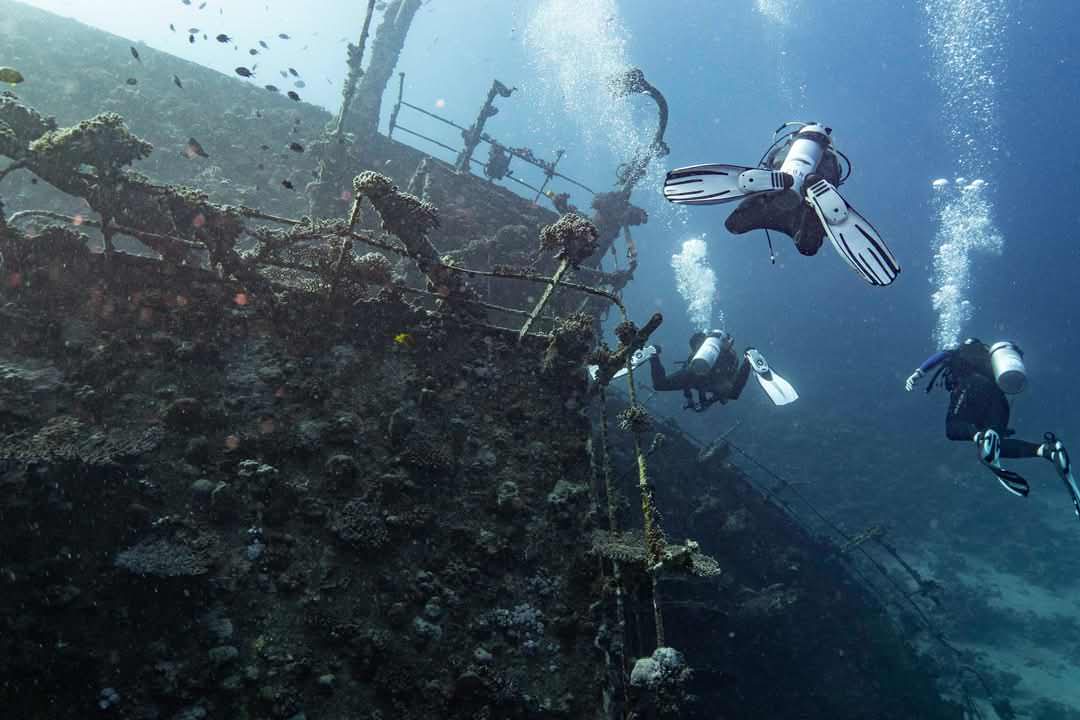
Abu Nuhas is a name that makes divers’ eyes light up instantly. For some it’s a legend, for others a “wreck Disneyland”. The truth is somewhere in between—and that’s exactly why Abu Nuhas is one of the most iconic dive sites in Egypt. If you love wreck diving, history, atmosphere, and warm Red Sea water, read on.
Why is Abu Nuhas so special?
Abu Nuhas is a reef north of Hurghada, famous for having several large historic wrecks in one place. Strong currents, a shallow reef, and heavy shipping traffic in the past meant that ships simply… ran aground here.
The result? A unique concentration of wrecks that are now home to corals, fish, and unforgettable experiences for recreational scuba divers.
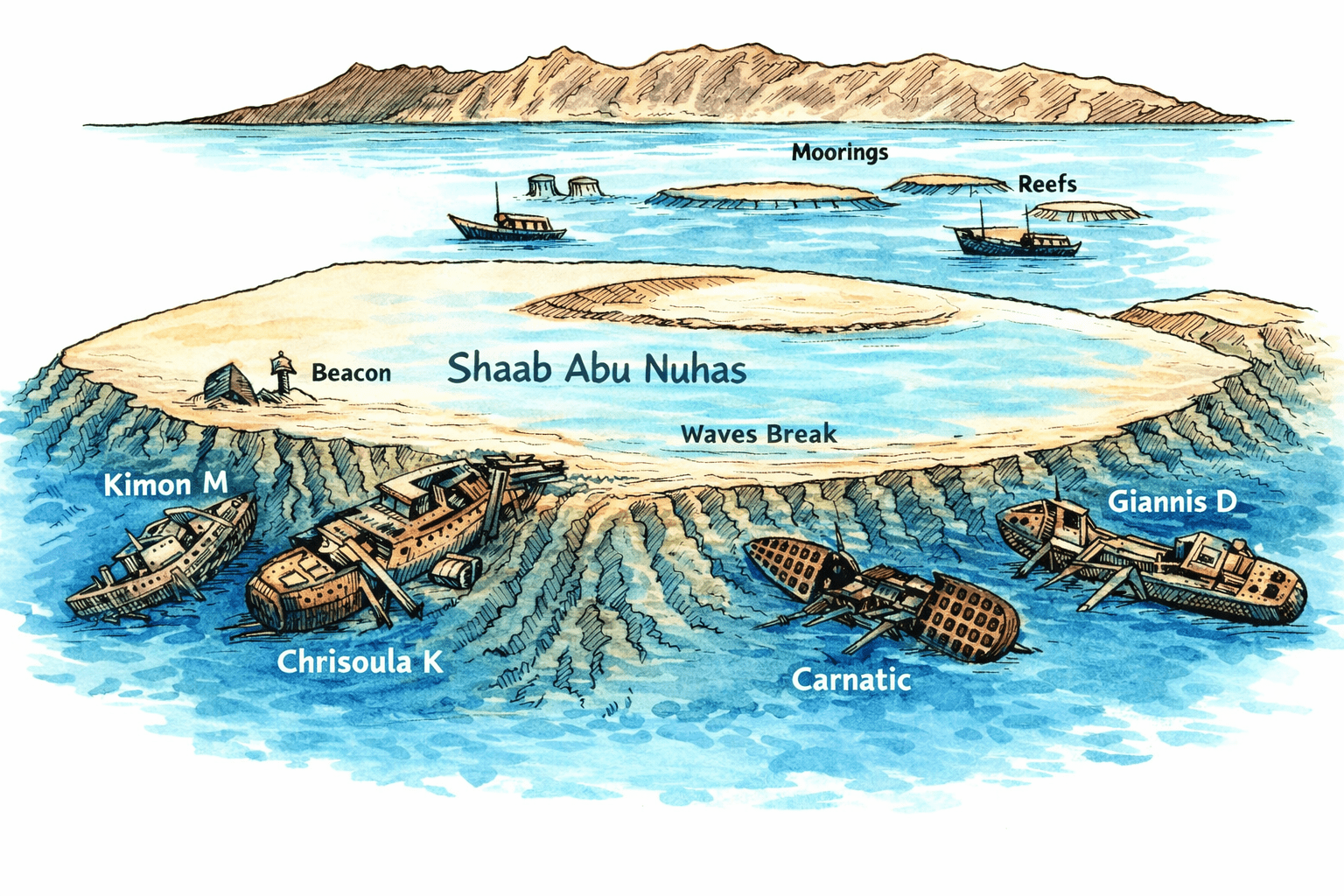
The best-known Abu Nuhas wrecks – north
Giannis D – a legend among wrecks
Giannis D is a Greek cargo ship that ran aground on the Abu Nuhas reef in 1983 while carrying a load of timber. The wreck lies at around 10 to 27 meters, making it one of the most accessible and most-dived wrecks in the Red Sea. The ship is broken into several sections, with the main highlights being the open engine room, massive propeller, and well-preserved decks. Thanks to its shallow position, the wreck is heavily covered in hard and soft corals and provides shelter for plenty of fish. Giannis D is an ideal wreck for recreational divers who want to get into wreck diving without needing penetration. Thanks to its photogenic look and easy access, it’s one of Egypt’s most iconic wrecks.
Carnatic – 19th-century history
Carnatic was a British steam and sailing ship that sank in 1869 on a voyage from India to Europe. It was one of the first large ships to wreck on this reef, starting Abu Nuhas’s reputation as a “ship graveyard”. Today it’s a heavily broken-up wooden wreck, with its skeleton lying at around 20 to 27 meters. The open structure lets light in, creating a unique atmosphere on the dive. Carnatic is especially popular with experienced divers and photographers who appreciate its historic character. The wreck is fragile and requires excellent buoyancy control.
Chrisoula K
Chrisoula K was a cargo ship that ran aground on the Abu Nuhas reef in 1981 while transporting ceramic tiles. The wreck lies at around 4 to 27 meters, and part of the hull is still relatively well preserved. A defining feature is the thousands of tiles still scattered in the cargo holds and around the wreck. The ship sits at an angle on the reef slope, which—combined with current—can make the dive more demanding. The wreck offers interesting external sections, but the interior is dark and often filled with sediment. Chrisoula K is better suited to more advanced recreational divers with wreck experience.
Kimon M
Kimon M is a Greek cargo ship that sank in 1978 after hitting the Abu Nuhas reef. It’s the deepest wreck in this area, with its lower sections reaching down to around 32 meters. The wreck is heavily damaged and deformed in places, reflecting the hard impact and years of exposure to the sea. Because of the depth and more frequent currents, the dive on Kimon M is more challenging and is recommended mainly for experienced divers. It’s less covered in coral than the shallower wrecks, but offers a rawer, more technical experience. It’s often dived as part of liveaboard itineraries rather than day trips.
What kind of diving can you expect at Abu Nuhas?
 Depths: approx. 10–30 m
Visibility: often 20–30 m
Currents: moderate to strong (depends on the day)
Dive types: wreck + drift (zodiac)
Certification: minimum Open Water, ideally Advanced
Abu Nuhas is often part of liveaboard itineraries, but it can also be visited as a day trip from Hurghada—it depends on the weather and logistics.
Practical tips for recreational divers
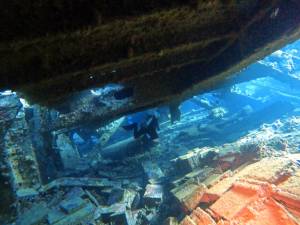 Bring a torch – even if many dives are “open water,” a light is a must for going inside wrecks. Feel free to bring a backup one too, just in case.
Gloves – exceptionally, gloves are allowed on wreck dives. For safety, not for touching.
Camera? Yes! – but buoyancy always comes first.
Full wetsuit – even if the water is a bath-warm 28°C in summer, protect the skin on your whole body. There are too many sharp, rusty objects everywhere around here.
Watch the marine life—morays, lionfish, barracudas, sometimes a turtle, an eel garden, and thousands of schooling fish. Now and then, around the southern lagoon, you’ll spot dolphins.
Safety notes you shouldn’t take lightly
⚠️ Currents can change quickly – stay with your guide
⚠️ Penetration only with training – no “I’ll just take a quick look”
⚠️ Sharp metal and nets – good buoyancy = fewer problems
⚠️ Nitrox is an advantage, but not a requirement
If you don’t have wreck experience, consider the Wreck Diver specialty—the difference in confidence and safety is huge.
Who is Abu Nuhas ideal for?
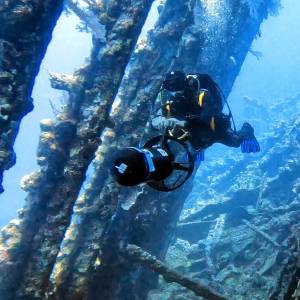
Diving Abu Nuhas is ideal for recreational scuba divers who want more than just reef dives. The site offers a unique mix of accessible wrecks, history, and dynamic conditions, making it a great fit for recreational divers who want to take their experience further. The Giannis D wreck in particular is a great choice for a first taste of wreck diving.
More advanced divers will appreciate the larger area, the option to combine multiple wrecks in one day, and working with current. Abu Nuhas is also an ideal place to take the PADI Wreck Diver Specialty, as it offers several wrecks at recreational depths and excellent conditions to practice procedures without the need for deep penetration. Photographers and fans of more technical dives will be drawn to the striking ship structures and dramatic light play.
This is also a site where using DPVs (underwater scooters) makes perfect sense. The distances between wrecks and the reef’s northern slopes make a scooter a practical helper and a fun part of the dive. On our liveaboards, we have DPVs available, and we provide full training before use so the dive is safe and comfortable even for divers without previous scooter experience.
Wrecks that give diving a story
Abu Nuhas isn’t just about diving. It’s about the stories of the ships that ended here—and how the sea took them back. Whether you go by liveaboard or as part of a day trip, wreck diving in the Red Sea will show you here why divers keep coming back to Egypt.
👉 If Abu Nuhas is on your bucket list, get in touch.
Check this year’s liveaboard (safari) schedule too—and if you want to include diving the Abu Nuhas wrecks on your trip, choose dates with a northern route:
Do you have any questions? Perhaps some of these most frequent ones, see Frequently Asked Questions:
(if you don’t find the answer, please write to us immediately!)
Is wreck diving at Abu Nuhas suitable for recreational divers?
Yes. Most wrecks in the Abu Nuhas area lie at recreational depths up to 30 meters and are accessible to divers with Open Water or Advanced Open Water certification. The Giannis D wreck in particular is considered an ideal “first wreck.” It’s important to dive with a local guide and respect the current conditions.
Do I need a special course for wreck diving in Egypt?
A special course isn’t required, but the Wreck Diver specialty is a big advantage. It teaches you proper dive planning, safe movement around a wreck, and how to work with lights and equipment. If you’re planning to penetrate a wreck, the course is definitely recommended.
When is the best time to dive in the Abu Nuhas area?
Diving at Abu Nuhas is possible year-round. The best conditions are usually in spring and autumn, when the sea is calmer and the water temperature is pleasant. In summer the water is very warm and visibility is still excellent; in winter, expect cooler water and occasionally stronger winds.
Can you dive Abu Nuhas from shore, or only by liveaboard?
Both options are realistic. Abu Nuhas is often visited as a day trip from Hurghada or El Gouna, but it’s also a popular stop on northern Red Sea liveaboard safaris. A liveaboard gives you more time, less stress, and the chance to do multiple dives on different wrecks. See when we’re heading there and join us: LIVEABOARD DATES AND ROUTES 2026
Are the Abu Nuhas wrecks safe?
Yes, if you follow the rules. The biggest risks are currents, sharp wreck sections, and poor buoyancy control. That’s why good preparation, using a torch, and following your guide’s instructions are recommended. Wreck diving in Egypt is safe when done responsibly.
This article was prepared by Eva, PADI Instructor at GRAND DIVERS
If you like this article and think it might be interesting for your diving friends, we’d be very grateful for a share: